Infinite Thirst, Finite Wells

Homily: Third Sunday of Lent (A)

Exodus 17:3–7 | Romans 5:1–2, 5–8 | John 4:5–42

8 March 2026

Fr. Ricky Cañet Montañez, AA 

A few months ago, someone confided in me. He said, “Father, I do not understand myself.”  From the outside, he seemed to have everything in place — a good career, financial security, the freedom to travel, and an active church life. Yet he continued, “I have changed careers three times. I have been in five serious relationships. I have moved homes twice. Every time I tell myself, “This is it. This will finally make me happy. But after a while… I realize something is still missing.” Then he paused and quietly asked, “Baka ako talaga ang problema?” — Maybe I am really the problem.  I am sure many of us know that feeling. When things do not turn out the way we hoped, when fulfillment fades sooner than we expected, we begin to wonder whether something within us is not quite right. 

When I prayed over today’s Gospel, I thought of him. Jesus tells the Samaritan woman, “You have had five husbands, and the one you have now is not your husband” (John 4:18). Our automatic reaction is often one of disgust at such a display of immorality. However, we can also see it as a story of repeated searching — of searching again and again for something that still does not satisfy.  Five husbands may not be our story. But five attempts at finding fulfillment might be — five diets, five business ventures, five boyfriends one after the other, five “new beginnings.” Five times we told ourselves, “This is it.” Five times we were hopeful and yet five times we end up disappointed. Often, what looks like immorality is really a deeper thirst of the human heart. 

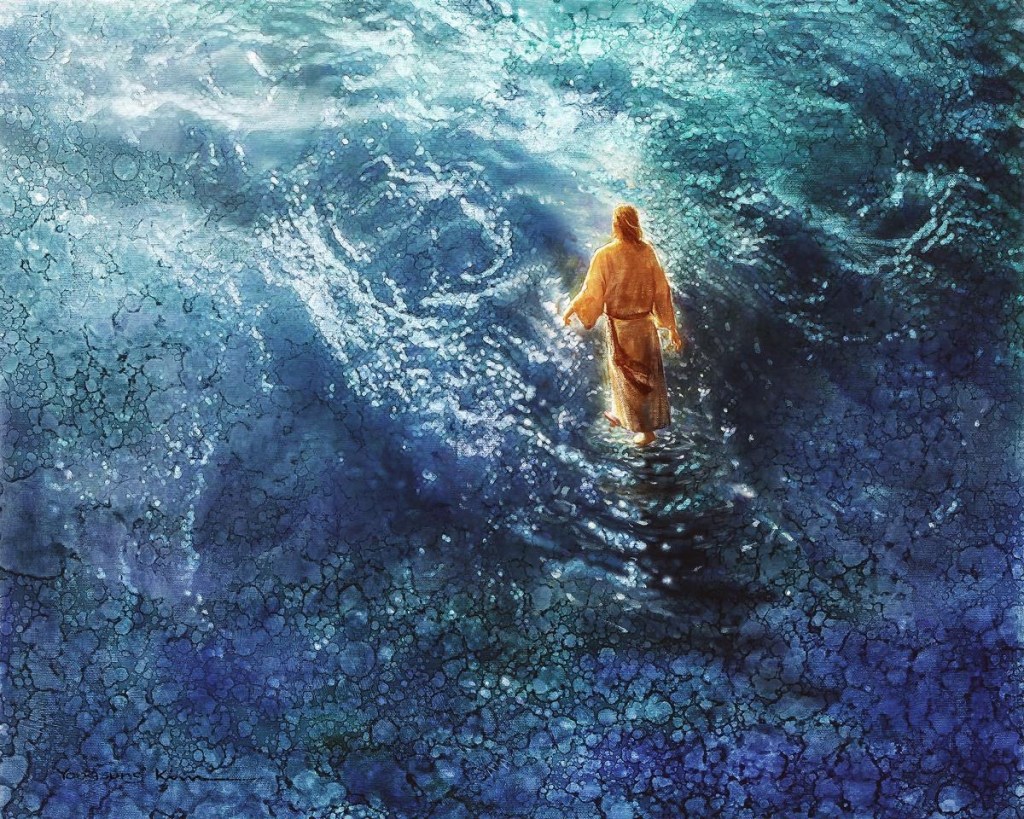
In the First Reading from the Book of Exodus, the Israelites, in their thirst for water, cry out in the desert, “Why did you ever make us leave Egypt?” (Exodus 17:3). Although God satisfies their thirst with water from a rock, a deeper doubt surfaces in their hearts: “Is the Lord in our midst or not?” (Exodus 17:7). They are freed from slavery, yet still restless. Liberation did not remove their thirst; it exposed it.  Meanwhile, in our gospel, Jesus opens a conversation with the Samaritan woman with a simple request: “Give me a drink” (John 4:7). A tired and thirsty Messiah waits. As the conversation unfolds, He tells her, “Whoever drinks the water I shall give will never thirst; the water I shall give will become in him a spring of water welling up to eternal life.” (John 4:14). It is not that she is being unreasonable. It is that she has been drawing from wells that cannot hold what her heart truly longs for. 

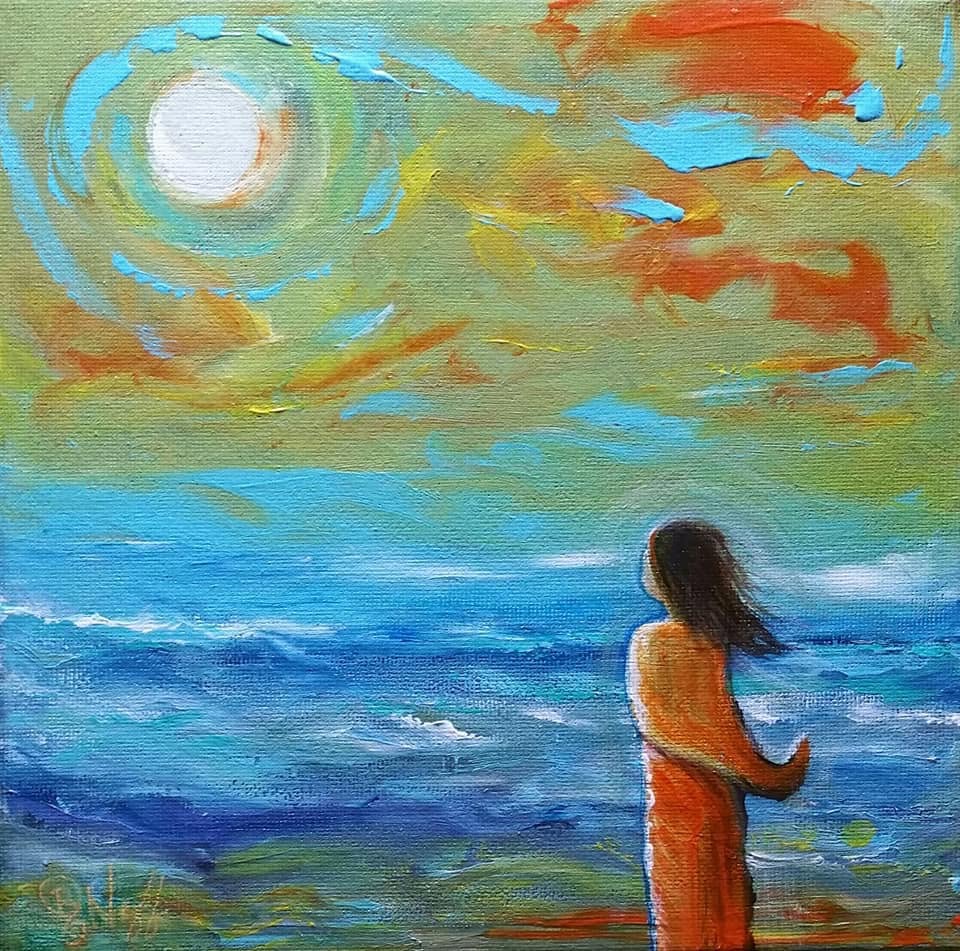
Similarly, our problem is not that we are thirsty. Thirst is part of being human. Our problem is that we keep trying to quench an infinite thirst with finite wells. We expect permanent joy from temporary successes. We expect absolute security from fragile relationships. We ask created things to give us what only the Creator can give. It is like stubbornly hoping to quench our thirst with sea water — the more we drink, the deeper the thirst becomes. After enough disappointment, we come to the conclusion that we ourselves are the problem.  We find our consolation in the Second Reading where St. Paul reminds us in the Epistle to the Romans: “The love of God has been poured out into our hearts through the Holy Spirit” (Romans 5:5). Poured out — not rationed, not earned! And even more striking: “While we were still sinners, Christ died for us” (Romans 5:8). Before we corrected our patterns. Before we broke our cycles. Before we found the right well, God had already prepared for us the source of Living Water.  One particular detail in the Gospel says everything: “The woman left her water jar and went into the town” (John 4:28). She leaves the jar because she came for ordinary water and encountered the Source. Nothing in her external situation immediately changes. What changes is her centre. She is no longer searching anxiously; she is witnessing joyfully. 

Perhaps this is the realisation we need.  It is not that we are the problem. Maybe our repeated disappointments are not proof of our failure but signs that our hearts are made for more than what this world can offer. St. Augustine writes at the very beginning of the Confessions (Book I, Chapter 1): “You have made us for Yourself, O Lord, and our heart is restless until it rests in You.” Restlessness is not rebellion. It is homesickness—God calling our hearts home. The man I spoke with thought he was defective yet I believe he was simply thirsty for Living Water. As we all are!

Thus, this week, before we go crazy, in search of something new to fill our longing and tell ourselves, “Maybe this time it will work”, let us just pause and ask ourselves quietly: Are we drinking from the wrong well? We thirst because we were made for God. May this Lent not be about trying one more strategy for self-improvement but about finally sitting at the well, admitting our thirst without shame, and allowing Christ to be our Living Water.

Enough Light for the Next Bend

Homily: Second Sunday of Lent (A)

Genesis 12:1–4a | 2 Timothy 1:8b–10 | Matthew 17:1–9

1 March 2026

Fr. Ricky Cañet Montañez, AA 

Is there anyone here from Nueva Vizcaya or Quezon Province? Travelling to and through these provinces requires traversing a long stretch of winding roads with sharp turns and hairpin curves that can be treacherous, especially at night or during the rainy season. The roads have no street lighting and are pitch black at night. They are also prone to landslides, so sometimes guardrails have been washed away and boulders, earth, and fallen trees block the inner lane. When we look ahead, we cannot see the whole road. We cannot see the turns far ahead. We do not know what is beyond the next bend. All we see is what our headlights can reach. Even with those road conditions, travellers still reach their destination. 

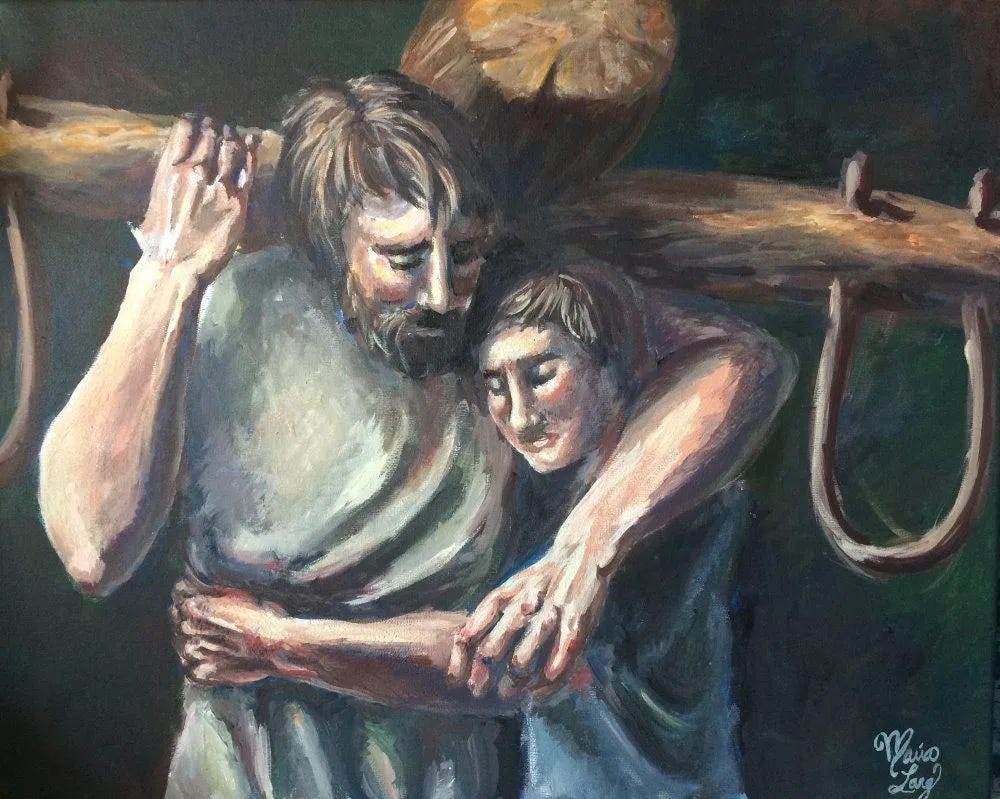
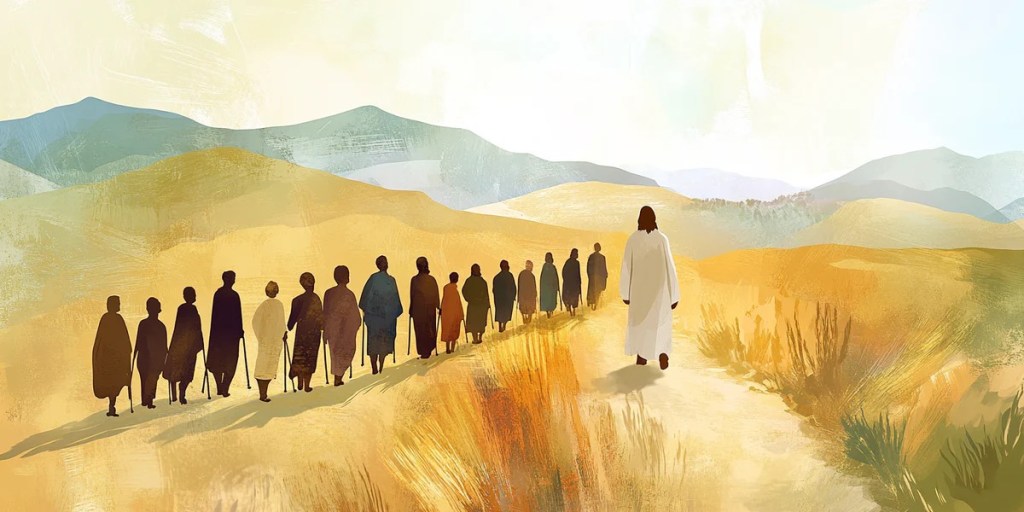
Brothers and sisters, sometimes on life’s journey we cannot really see the path we tread, but we just keep going. Sometimes the little light we have is enough to bring us to the next stretch. In the First Reading, God tells Abram, “Go forth from your land… to a land I will show you” (Genesis 12:1). God does not give a map. He does not explain the timeline. He does not describe the terrain. Paul, in the Second Reading, tells Timothy to bear his share of hardship for the Gospel (2 Timothy 1:8), because our salvation has been designed by God even before time began (2 Timothy 1:9). In our Gospel, Peter, James, and John witness the Transfiguration and see Jesus in glory (Matthew 17:1–2). It is beautiful and overwhelming. Peter even wants to build tents and remain there (Matthew 17:4), but Jesus does not consent, nor does He explain what just happened. Jesus simply says to them, “Rise, and do not be afraid” (Matthew 17:7), and then they go back down the mountain to journey toward Jerusalem. 

In all three (3) readings, God does not allow everything to be explained. He reveals just enough. Abram is merely given a promise — but not the details (Genesis 12:2–3). Paul does not specify to Timothy what hardships lie ahead, but he consoles him, saying that God gives strength and that grace has been bestowed in Christ Jesus (2 Timothy 1:7, 9). The three disciples were simply given the privilege of a glimpse of what lay far ahead (Matthew 17:2). They did not have a clear vision of how God’s plan would unfold, but they were given just enough light to sustain them when the darkness of the Cross came. 

Perhaps that is really how God works in our lives. We want clarity. We want the full picture. “Lord, tell me what will happen to my health. Tell me what will happen to my family. Tell me how this problem will end. Tell me where this new assignment will lead.”  More often than not, God withholds the whole roadmap. Instead, He gives a promise. He gives His presence. He gives enough light for the next step. Faith, after all, is not about seeing the entire highway. Faith is trusting the One who travels with us in the dark. 

Perhaps, some of us are on a road where our vision does not stretch very far. The future feels uncertain, our plans unclear, and the path ahead is unfamiliar. Perhaps you have received a serious health diagnosis and do not know what treatment to take, how you will afford it, or whether your body will be able to endure it. Maybe you are graduating from school in the next months and are daunted by the numerous applications you must go through before you land a job. Or maybe you are experiencing more frequent misunderstandings with your spouse and are worried whether these will be resolved or lead to separation. Often, we find that life is like that — curious, mysterious, difficult to explain, and unpredictable. Perhaps we need to be reminded that we do not have full control over our lives. We cannot completely direct them where we want them to go, for we do not know what the future holds. 

Today the Lord is saying to us what He said to Abram: “Go” (Genesis 12:1). He is repeating what He says to the disciples: “Rise, and do not be afraid” (Matthew 17:7). He is echoing what He says through Paul: rely on the grace of God (cf. 2 Timothy 1:9). We simply have to be attentive to God speaking to us and leading us through the dark, winding roads of our earthly journey. 

We do not need to see everything. We must trust in the One who created everything and is Master of everything. We need only enough light for today — and that light is Christ!

Empty Road at Nigh Time by Vitaly Kushnir

What Adam Wanted. What Christ Refused.

Homily: First Sunday of Lent (A)

Genesis 2:7–9; 3:1–7 | Romans 5:12–19 | Matthew 4:1–11

22 February 2026

Fr. Ricky Cañet Montañez, AA 

Once, I overheard someone ask his friend, “Why is it that the things we are not allowed to have seem the most attractive? And isn’t that true? Those with high blood pressure still feel tempted to pinch a little lechon. Those with diabetes sometimes secretly reach for chocolate or cake. We know it is not good for us — and yet we desire it. It is difficult to understand why something that seems pleasurable can actually harm us. This tension is as old as humanity itself. 

In the Book of Genesis (Genesis 2:7–9; 3:1–7), the first sin revolves around something that looked good. The fruit in the Garden of Eden was described as good for food, pleasing to the eyes, and desirable for gaining wisdom (Genesis 3:6). There was nothing ugly about it. The serpent did not shout nor threaten; he planted a small doubt: “Did God really say…?” (Genesis 3:1). Then he offered what sounded like a thoughtful argument: “You will not die… you will be like God” (Genesis 3:4–5). It sounded reasonable. Why shouldn’t they desire wisdom? Why not take just one bite? The temptation did not appear evil. It appeared sensible. And that is precisely why it became dangerous. 

The same pattern appears in the desert in the Gospel of Matthew (Matthew 4:1–11). After fasting for forty days, Jesus was hungry. The tempter said, “If you are the Son of God, command that these stones become loaves of bread” (Matthew 4:3). Is that unreasonable? He was hungry. Bread is good. He had the power. Why not solve the problem? Then the devil cited Scripture urging Jesus to throw Himself down from the temple because God would protect Him (Matthew 4:6). Finally, he offered Jesus all the kingdoms of the world without the suffering of the Cross (Matthew 4:8–9). Each temptation sounded practical, efficient, even strategic. The most dangerous temptations are not the shocking ones. They are the ones that appear reasonable. 

We see this in ordinary life. A married couple slowly grows distant. They are not fighting; they are simply tired from working hard for the family. Then an old friend reconnects through social media. It begins innocently: “We’re just talking.” “It’s harmless.” “I deserve someone who listens.” It sounds understandable. However, little by little, something sacred begins to shift. The heart wanders long before any betrayal becomes visible. Consider, for instance a student who cheats on a short quiz and insists, “I studied.” I’m just exhausted.” “It’s only five points.” It seems small and harmless. Even in ministry, we can say, “I’ll pray later. I’m busy serving. God understands.” It sounds responsible. Yet slowly, the soul dries up. Temptation rarely says, “Destroy your life.” It says, “This is practical.” 

In the Letter to the Romans (Romans 5:12–19), St. Paul tells us that through one man, sin entered the world, and through one man, Jesus Christ, grace overflowed for many. What is the difference between Adam and Christ? Adam saw something desirable and took it. Jesus saw something legitimate — and refused it. Turning stones into bread was reasonable, but obedience to the Father was faithful (Matthew 4:4). Taking the kingdoms without the Cross was efficient, but love that suffers was faithful (Matthew 4:10). In Jesus we learn that what is reasonable and what is faithful are not always the same. Reasonable choices often protect comfort; faithful choices protect communion. Reasonable choices justify themselves; faithful choices surrender to God. 

Perhaps this is what Lent is truly about. Not merely giving up chocolate or coffee, but asking deeper questions. Where have I quietly justified something? What small compromise have I labelled “not that serious”? What habit have I excused because “everyone does it”? The Fall began with something that looked good. Salvation began with Someone who chose what was truly good beyond appearances. The narrow road may not always seem reasonable, but it leads to life (Matthew 7:14). 

The good news is that Christ has already walked that road for us. Where Adam fell, Christ stood firm. When humanity gave in to the voice of temptation, Jesus chose to trust the voice of the Father. Grace is stronger than subtle temptation. Grace requires clarity of heart. Thus, this Lent, let us ask for the gift of discernment — not only to avoid obvious sin, but to recognise the gentle, reasonable whispers that slowly pull us away from God. And upon hearing them, may we respond as Jesus did: rooted in the Word, steady in trust, and faithful — even when faithfulness seems unreasonable.

Entrusted with Freedom

Homily: Sixth Sunday in Ordinary Time (A)

Sirach 15:15–20 | 1 Corinthians 2:6–10 | Matthew 5:17–37

15 February 2026

Fr. Ricky Cañet Montañez, AA 

Have you ever noticed how parents treat their children differently as they grow older? When children are small we grip their hands tightly when crossing the street. We practically watch their every step lest they fall or get lost. But when they grow older, something changes. Slowly the parent loosens their hold on their child. One day the parent says, “My child, you can do it now. You make the decision.” Not because they care less, but because they trust more. And that is love at its most mature — not to control, but to trust. 

This image helps us understand our readings today. In the Book of Sirach we hear, “If you choose, you can keep the commandments… Before you are life and death, good and evil, whichever you choose shall be given you” (Sirach 15:15, 17). It is as if God is saying, “My child, you will choose.” God does not force us to love Him. He does not program us like robots. Because love that is forced is not love at all. Love must be chosen. St. Paul tells us that this is a wisdom meant for the spiritually mature: “We speak a wisdom of God… revealed through the Spirit” (1 Corinthians 2:7, 10). God is not raising slaves who obey out of fear. He is raising sons and daughters who understand and love. Obedience flows not from fear, but from love. 

In the Gospel Jesus adds more depth to the commandments. He says, “Do not think that I have come to abolish the law… but to fulfill” (Matthew 5:17). Then He adds, “You have heard… you shall not kill… but I say to you, whoever is angry with his brother will be liable to judgment” (Matthew 5:21–22). And again, “You shall not commit adultery… but I say to you, everyone who looks with lust has already committed adultery in his heart” (Matthew 5:27–28). Jesus is not adding more rules; He is moving the law from the outside to the inside, from behaviour to the heart. The truth is, anyone can follow rules when watched, but only a mature person chooses to do what is right even when no one sees. We need to recognise that the commandments are not chains. They are God’s loving directions toward life. 

Brothers and sisters, this movement from law to love also applies to how we give to God. In the Old Testament, tithing was required. The people were commanded to give one-tenth of their harvest: “Every tithe of the land… belongs to the Lord” (Leviticus 27:30). It was clear, fixed, and obligatory. But when Jesus came, He did not simply compute percentages. He looked at the heart. Remember the poor widow in the temple. While others gave large amounts, she offered two small coins — almost just loose change, the only thing she had left, yet she gave it without hesitation — and Jesus said, “This poor widow has put in more than all the others… she, out of her poverty, put in all she had to live on” (Mark 12:43–44). No forcing. No percentage. But her gift was total because it was free and loving. That is why in the Catholic Church, we do not force tithing. We invite. We teach stewardship. We encourage generosity. However, we do not demand like a fixed tax because God does not want forced giving. As St. Paul says, “God loves a cheerful giver!” (2 Corinthians 9:7). Freely given. From the heart. For love cannot be demanded nor collected like a bill; it can only be offered. 

What is forced is difficult because it goes against the freedom that the Lord has given us as a gift. Notice that this is also the principle of our Church when it comes to elections. The Church forms our conscience, teaches us what is true and good, but we do not practice block voting or force people whom to choose. Faith respects freedom. The Church guides, but the decision remains personal. Just like God, the Church says, “Pray. Discern. You will choose” As a vote forced by pressure, has no moral value. On the contrary, a choice made in conscience is an offering to God. Yes, this is both beautiful and frightening because freedom means responsibility. Every day we face Sirach’s words again: life or death, good or evil. No one will force us. God simply trusts us — to forgive, to be faithful, to be honest, and to love. 

Maybe, that is what touches me most today. The all-powerful God placing His hopes in our small, imperfect hearts. Like a parent saying, “My child, you can do it.” God holds our hand when we are weak, but as we grow, He slowly lets go and says, “I trust you to choose life.” Thus, today, let us ask ourselves quietly: What am I choosing lately? Does my freedom lead me closer to God or farther from Him?

In the end, our faith is not about control. It is about trust. God does not control us. He entrusts Himself to us. And when someone trusts us that much — when God Himself trusts you — the only beautiful response is this: “Lord, freely, willingly, with all my heart… I choose You.”

Quietly Changing the World as SALT, as LIGHT

Homily: Fifth Sunday in Ordinary Time (A)

Isaiah 58:7-10 | 1 Corinthians 2:1-5 | Matthew 5:13-16

8 February 2026

Fr. Ricky Cañet Montañez, AA 

Have you ever noticed how sometimes the smallest things make a big difference? I was walking along a busy street when there was a sudden downpour. As I took shelter, I saw a street vendor struggling to hold her umbrella while serving customers. A tricycle driver with a slight frame, ran over and held the umbrella for her for a few minutes. He looked like he was about to be swept away by the wind, but he stayed. None of the customers paid any attention to him, but the vendor was able to serve her customers and survive another day. That little moment which hardly anyone noticed made a difference. 

His act of kindness while remaining invisible, reminded me of today’s readings on salt. Salt is never at the centre of a meal nor is it celebrated  at the dining table, but no cook can do without it. When we eat we do not normally see the salt, but we know it is there. In the same way, we are aware when it is missing. We never praise the salt in your “sinigang” or “adobo”. But without it, everything tastes bland. 

Today, Jesus tells us, “You are the salt of the earth” (Matthew 5:13).  I believe Jesus is telling us we need not draw attention to ourselves to do good in the world. We do not have to be flashy to make the world a little better. Like salt, we can quietly, faithfully, without recognition, bring flavour to the world. Our small acts of kindness, compassion, and service, can enhance life and make it more beautiful. How can we be salt? We can be that neighbour who quietly helps another resident who is struggling to buy food. We can be the co-worker who simply listens to a colleague who is carrying heavy problems. Or whatever small good we choose to do — a simple gesture, a kind word, a helping hand — let us do it quietly, without waiting for applause, without needing an audience, and without posting it on social media. It is because real love does not perform; it simply serves. 

St. Paul reminds us that we do not need to be impressive to make a difference. He came “in weakness and fear,” not with eloquence or wisdom (1 Corinthians 2:1-5). Faith is not a performance; it is authenticity. People do not need perfect Christians; they need real ones. Even the Barangay health worker who quietly visits the elderly at home, or the jeepney driver who gives a free ride to someone sick, are living examples of this truth. Isaiah gives us a clear picture of what this looks like in real life. God does not ask for empty fasting or rituals that make ourselves seem impressive. On the contrary, He asks us to feed the hungry, clothe the naked, shelter the homeless, and not turn away from those in need (Isaiah 58:7-10). 

Jesus also calls us the light of the world. Salt enhances flavour whereas light shatters darkness. Light does not shout. It quietly shines, slowly and steadily. A little bit of it already makes a difference in a dark room. Even a small candle during a “brownout” can keep someone from tripping over objects on the floor while moving through the house. 

That is exactly how our lives can be. We may not change the whole world, but the simple things we do — listening to a friend, forgiving a family member, helping someone in need, volunteering quietly at the parish — bring light into someone’s darkness. 

Brothers and sisters, holiness is not about being spectacular. It is about being faithful in the small, quiet, and consistent ways we serve. We may never be noticed, and that is okay. What matters is that someone’s life is warmer, brighter, and better because of us. That small light we offer, that small flavour we add — it may be of no consequence or inconvenience to us but it could change someone’s world. When we live this way, our lives themselves become a witness. People may not remember what we said or how we looked, but they will never forget how we made them feel, how our quiet presence made their day, their week, or even their life a little sweeter, a little lighter. 

And maybe, when we reach heaven, God will not ask: “How famous were you?” He will ask: “Whose life became better because you were there?” And if even one person says, “Lord, because of him/her… life had flavour… life had light”—that will be enough for Him. May we all be like salt that quietly elevates and may we be like light that shines without discrimination — not for glory, not for applause — but because this is the way Christ works through us to make life better for others.

An award-winning, art by Greg Rutkowski

The Quiet Strength of the Meek

HOMILY: Fourth Sunday in Ordinary Time (A)

Zephaniah 2:3; 3:12–13 | 1 Corinthians 1:26–31 | Matthew 5:1–12a

1 February 2026

Fr. Ricky Cañet Montañez, AA 

Once, I had a conversation with a newly turned senior citizen (he had just turned 60). He said, “Father, I noticed something changed in me when I turned 60.” He said that before, he could not sit still whenever he was accused of something based on a wrong assumption. He felt he had to explain and correct every rumour just to clear his name. Now, he says, “Father, now, sometimes I just let it be.” He laughed a little and added, “Not because they are right — but because I am already tired.” We both laughed because we both understood. 

You reach a certain point in life — usually in your 60’s — when you realise everything not all battles need to be fought. Not because you are a coward, but because you already know what truly matters, and which things should simply be let go. We learn to choose our battles! We begin to realise: proving ourselves is tiring. It is exhausting to keep defending yourself at every opportunity. It is exhausting to keep showing that you are right, good, worthy — especially when you know that no matter how much you explain, there are people who simply refuse to understand. That, brothers and sisters, is not a moment of weakness, but rather the beginning of wisdom. 

This is exactly the kind of wisdom we hear in today’s readings. Zephaniah speaks of a people who are lowly and humble. They do not hurt others. They are not deceitful. They simply trust in the name of the Lord. Despite the many hardships they have gone through, they will not go home weeping. God Himself will lift them up from where they have fallen. He will elevate them by His own power and rebuild what was lost. 

St. Paul, in our Second Reading, is very direct — almost blunt. “Consider your calling,” (1 Corinthians 1:26) he says. You were not chosen because you are talented, famous, or impressive. God chose what is weak, what is ordinary, what the world easily ignores. In other words: God is not impressed by resumes. God looks for hearts that are free. 

St. Paul ends by saying “Whoever boasts, should boast in the Lord.” (1 Corinthians 1:31) Apart from God, we are nothing and have nothing. In life, we can lose everything — health, wealth, power, fame, and even loved ones, but God is the only one with the power to restore all those things to us, just as He did with His servant Job. It is our connection with Christ, our relationship with God, that is our true treasure and pride — the only thing worth preserving and fighting for. 

The Gospel only emphasises this theme of humility before God when we hear the Beatitudes. Jesus does not say:

Blessed are the achievers.

Blessed are the winners.

Blessed are those with all the answers. 

Rather He says:

Blessed are the poor in spirit.

Blessed are the meek.

Blessed are the merciful. 

These are not the words of someone glorifying weakness. These are the words of someone describing inner strength. You see, God’s favour and blessings are not a reward for “winning” at life. It is a comfort for those who recognise they are incomplete without Him. 

The person who turned 60 and shared his story with me — did not become oblivious or “deadma” to the world. He did not stop caring. He simply stopped proving himself. He no longer needed to win every argument, correct every accusation, or explain himself to everyone. That kind of freedom is rare because the strongest people are not those who shout the loudest but instead, they are those who know who they are in God’s eyes — even when misunderstood. They can walk away, keep their peace, and sleep well at night. By learning to let go of grudges, of irritations, and of many things that spark anger, hatred and discord, they make room in his life to better receive the graces from heaven. That confidence in God’s providence for all their needs is enough. This assurance is what floods him with peace. 

Today, at this mass, Jesus is blessing many people here — those who are tired, those who have lived long enough to know what really matters, those who no longer need to prove they are good. If we feel these words are describing us, then let us hear this clearly: we may not look impressive to the world, we may feel like we are losers according to the standards of the world — but because we are here, keeping close to God, we are most blessed in His eyes. We will receive all that we need, in God’s time.

When the Light Quietly Returns

HOMILY: Third Sunday in Ordinary Time (A)

Sunday of the Word of God / National Bible Sunday

Isaiah 8:23–9:3 | 1 Corinthians 1:10–13, 17 | Matthew 4:12–23

25 January 2026

Fr. Ricky Cañet Montañez, AA 

Have you ever experienced feeling like a robot? Do you wake up in the morning and run through the motions of your day — doing all that is expected of you, fulfilling all your responsibilities like a machine carrying out everything it is programmed to do—no error, no complaint, fully charged… at least on the outside? 

On the surface, everything functions as it should. beneath it, something feels quietly disconnected. 

Sometimes, the hardest part of life is not failing — it is succeeding while feeling completely empty. In these moments, we do not need a lecture, advice, nor explanation. Those things feel irrelevant because we are not doing anything wrong. In fact, we are doing everything right. One may be a devoted spouse, a hands-on parent, a loyal child… A capable and reliable employee — a neighbour, a student, a friend whom everyone counts on. Yes, we are not lost. We are walking the same familiar paths we have walked for years. The scenery has not changed. The people have not changed. Our commitment has not wavered. The only difference is that the light has gone dark. We are not looking for an exit—we are simply waiting for the colour to return to a world that has slowly turned grey; waiting for the light to come back on. 

In our First Reading, we hear Isaiah’s prophecy: “The people who walked in darkness have seen a great light” (Isaiah 9:2). Notice the words — “walked in darkness.” These were not people who rebelled against God nor ran away from Him. They were people who kept walking. Faithful people. Responsible people. Good people who simply woke up tired. This sounds very familiar, doesn’t it? Many of us are working so hard just to be good and responsible. And this can be exhausting. Tired from work. Tired from problems that never seem to end. Tired of being strong for everyone who depends on us. Sometimes, even tired of serving in the Church—or tired of trying to be holy. 

A few years ago, someone told me, “Father, I still come to Mass every Sunday. But honestly… I do not feel anything anymore.” He said, “I pray, but my mind is elsewhere. I read the Bible, but the words do not move me anymore.” One night, while cleaning his house, he found an old Bible on a shelf — dusty, with notes written years ago. Out of boredom, he opened it. And the first words he saw were: “Come to me, all you who labour and are burdened” (Matthew 11:28). He told me, “Father, I was not even looking for a miracle. However, it felt like those words were meant for me.” Then he added, “For the first time in a long while, I cried — not because my problems were solved, but because I realised God had never stopped looking for me.” This is how the Word of God works. It does not arrive with fireworks or loud announcements. It does not force itself. No pressure. No noise. Just quiet light. Gentle warmth. The kind that slowly brings feeling back into what has grown numb. 

Moreover, this is exactly how Jesus begins His mission in today’s Gospel. He does not go to Jerusalem, the centre of power. He does not seek influence or recognition. He goes to Galilee — ordinary, noisy, imperfect. There He finds fishermen — not praying, not reading Scripture, but working with their hands. Their clothes smell like fish, not incense. Their hands are rough from routine, their hearts perhaps tired from years of the same work. Jesus says only one sentence: “Come after me, and I will make you fishers of men” (Matthew 4:19). No explanations. No conditions. No promises of comfort or success. 

And yet, Scripture says Simon and Andrew left their nets at once, while James and John immediately left their boat—and even their father (Matthew 4:20–22). When the Word of God speaks, it reaches deeper than logic. It touches the part of us that has been waiting, even if we could not name what we were missing. Perhaps those fishermen, too, were among those “walking in darkness” — faithful, hardworking men simply doing what they had always done, until the light found them. 

In the Second Reading, St. Paul addresses a divided community: “I belong to Paul,” or “I belong to Apollos,” or “I belong to Cephas” (1 Corinthians 1:12). It sounds very modern, doesn’t it? Even today, we sometimes identify more with groups, personalities, or opinions than with Christ Himself. St. Paul on the other hand, reminds us: “Is Christ divided?” (1 Corinthians 1:13). The Word of God does not create camps. Our pride does. 

The Word gathers.

The Word heals.

The Word recentres our hearts. 

On this Sunday of the Word of God, we are reminded that Scripture is not just something to be read or studied. It is something that finds us — especially when we are tired, faithfully, and quietly walking in the dark. When we allow the Word to return to the centre, something stirs again. We stop merely functioning… and we begin living. And slowly, gently, the light turns back on.

Through Childlike Hearts

HOMILY: Feast of the Santo Niño (A)

Isaiah 9:1–6 | Ephesians 1:3–6, 15–18 | Matthew 18:1–5, 10

18 January 2026

Fr. Ricky Cañet Montañez, AA

When we were children, life seemed simpler. When we were young, our problems were things like: “Do I have ‘baon’ (pocket money)” or “Will we be allowed to play?” As we grow older, the problems change: bills, deadlines, family issues, health concerns—and sometimes even faith issues. As life becomes more complicated, we sometimes feel that our relationship with Christ becomes complicated as well. We begin to focus on rules and religious demands, and without realizing it, we get lost in them — until we slowly drift away from a living relationship with God Himself.

In today’s Gospel, Jesus offers a startling correction to our tendency to overthink and overcomplicate life. When the disciples press Him with the question, “Who is the greatest in the kingdom of heaven?” (Matthew 18:1) Jesus does not respond with a lecture, a formula, or a strategic roadmap for success. Instead, He performs a silent but radical act: He places a child in their midst. His words are as simple as they are challenging: “Unless you change and become like children, you will not enter the kingdom of heaven.” (Matthew 18:3)

He did not say, “Study harder.”

He did not say, “Just behave yourselves.”

And He certainly did not say, “Act childish.”

He said, “Become like children.”

What is so exemplary about a child in the eyes of God, when in practical terms a child knows very little and still has so much to learn? First, a child trusts easily. When a parent says, “Just hold on to me,” the child holds on — even without knowing where he or she is being led. We, adults are different. We ask questions. We doubt. “Are you sure? Is there a contract? Is there a backup plan?” Even with God, we say, “Lord, I will trust You — but please explain everything first.” And God smiles, because that is not how children love. Children love by trusting, not by demanding explanations.

Second, a child is honest. When children are hurt, they cry. When they are happy, it shows. When they are angry, they are direct. We adults, however, love to pretend. We pretend we are okay when we are not. We say things we do not really mean. We tell God, “We’re fine, Lord,” even when we are already breaking inside. We think this is what God wants to hear. We think we need to appear strong because our God is strong. But the Child Jesus reminds us: God does not want a perfect performance. He simply asks that we be real with Him.

Conversion, then, is not about growing up more, but about learning how to be a child before God again. St. Paul, in the Second Reading, reminds us that we were chosen and loved by God even before the foundation of the world — before we achieved anything, before we proved anything, before we succeeded or failed. Before all of that, we were already loved. Many of us forget this, while children understand love instinctively. Notice that children do not try to be great. They simply want to be held…to be loved! 

Jesus affirms this when He says, “Whoever humbles himself like this child is the greatest in the kingdom of heaven.” (Matthew 18:4) He also warns us, “Do not despise one of these little ones.”  (Matthew 18:10) Perhaps Jesus is reminding us that when we look down on weakness, simplicity, and vulnerability, we slowly lose our way back to God.

So today, on the Feast of the Santo Niño, the invitation may be very simple:

       •     To pray honestly again

       •     To trust without trying to control everything

       •     To come to God without pretending

There is no need to appear as experts or strong people before Him. In the end, heaven is not for those who have everything figured out. Heaven is for those who still know how to kneel, look up, and say with the heart of a child: “Father, I need You.”

From stunninganing posts

JUST LOVED!

HOMILY: Feast of the Baptism of the Lord (A)

Isaiah 42:1-4, 6-7, Acts 10:34-38 and Matthew 3:13-17.

11 January 2026

Fr. Ricky Cañet Montañez, AA

Let me begin with a simple yet difficult question: “When was the last time you felt truly loved for who you are — not because you were a big help, nor because you accomplished a feat, nor because you were useful?” — But simply because you are loved!

Many of us struggle to answer that — because from an early age, we have received more love and attention when we have done something praiseworthy, helpful or exceptional such as getting good grades or doing a great job. And slowly, we begin to believe that love equals approval and applause. Without realizing it, we start thinking: “If I stop doing or performing, I stop mattering.” This translates into all our relationships — even into our relationship with God.

Today’s Gospel is so powerful because it is a massive wake-up call. It shows us why it just is not true that we have to be productive or worthwhile to be loved.  We hear that Jesus goes to John to be baptised in the Jordan River.  He has not yet preached, healed anybody, or performed any miracles publicly but at that moment, heaven opens.  The voice of the Father says: “This is my beloved Son, with whom I am well pleased.” (Matthew 3:17) Jesus receives a very public affirmation simply because of who He is. Jesus is loved before He can fulfill the Father’s will!  

Let us also take note that Jesus does not stand apart. He does not claim a special place.  He waits for His turn, stepping in line — with sinners, with the broken, with people trying to begin again.  God does not look for a pedestal to look down on us; He looks for a place in the line to stand beside us. Heaven does not just open for the powerful; it opens in the ordinary river of our daily lives, shared with the people around us. This echoes the First Reading from Isaiah: “A bruised reed he shall not break.” (Isaiah 42:3) God is gentle with His people, especially with those the world sees as fragile or weak. He does not demand more from those who are already weary. Instead, He draws near, delighting in their presence and loving them as they are — because He is our Father, and we are His children.

Life today can be exhausting. It is so easy to feel tired today — not just tired in the body, but also tired in the soul. Young and old alike feel the weight of responsibility, the pressure of having to live up to standards, and the anxiety of waiting for acceptance and belonging. Many of us are tired of being strong, tired of being needed and tired of feeling guilty when we can no longer do as much as before. I know of elderly people or persons with disabilities who feel unloved because they have become weak and dependent. They believe they are no longer as productive or useful, thinking: “Wala na akong silbi.”  (I am useless!”) Let us stop listening to this voice in our head. This is definitely not God’s voice. God did not say, “This is my Son because he is productive.”  Rather, God says, “This is my beloved Son.”  God loves Jesus because He is His Son. God loves you and me because we are His children.

Sometimes, we act as though we can earn God’s love.  We treat God like a boss. Church workers and those who serve the church can be guilty of this. We work as though God were keeping tabs on us, keeping a checklist of duties and we panic when we fall behind.  The truth is this:  God loved us long before we ever served Him. He loved us as children before we could even speak. He loved us as young persons, making mistakes while learning our identity and discovering our talents and capabilities. The Acts of the Apostles tell us that Jesus was anointed by the Spirit — and then He went about doing good.  (Acts 10:38) Love came first.  Mission followed. Baptism, brothers and sisters, is not an assignment; it is our identity.  Before we are sent, we are embraced. Before we are called to do good, we are called beloved.

Today, as we remember the Baptism of the Lord, let us remember our own baptism when we officially became part of God’s family. God does not look at us and ask, “What can you do for me?”  God looks at you and me and says: “You are my beloved.” It is this love — and only this love — that fuels our mission. We do not do good to earn God’s favour; we do good because we are already loved by God. Driven by this love, we go forth to transform the world.

Baptism of Christ by Olga Bakhtina

God’s Quiet Light in the Dark

HOMILY: Solemnity of the Epiphany of the Lord (A)

Isaiah 60:1–6 | Ephesians 3:2–3a, 5–6 | Matthew 2:1–12

4 January 2026

Fr. Ricky Cañet Montañez, AA 

A few nights ago, while many of us were welcoming the New Year with fireworks, loud celebrations, and tables filled with food and drinks, a tragedy quietly entered the life of a family we know well.  A fire broke out in Pook Malinis and in an instant, everything changed for Jayson and his family.  His wife and child are now in the hospital, fighting for their lives. When something like this happens, words fail us. No explanation seems sufficient. No prayer seems strong enough. There is only silence… tears… and a question whispered deep within the heart: “Lord, where are You?” 

Today’s Solemnity of the Epiphany of the Lord reminds us that God chose to manifest Himself to His people; He shows up for us in the real world. At Christmas, God took on human form so we could truly see, hear, and touch Him. By welcoming the Magi from different eastern nations, He showed that His love is for everyone, everywhere.  The Gospel tells us that the Magi followed a star — not a bright road, not a clear map — just a small light in the darkness. They did not wait for everything to make sense. As stars only appear when the night is deep they began their journey in darkness.  They trusted that the light they had was enough for the next step. To this day, we still encounter God personally, usually not in grand gestures, but in the quiet, unassuming moments where our pain, anger, fear and confusion can cause us to miss His presence. 

Many of us are walking difficult roads today.   Some of us might be carrying a quiet grief, a lingering fear, or just the weight of being very, very tired and feeling a lack of direction. But even in the shadows, there is a hidden grace at work. There are people — some we love, and some we have never met — holding us in their thoughts and prayers. There are those who will step out of their own way just to offer us a hand. This is the true ‘star’ of the season: not a magic cure for our pain, but the steady, quiet light that reminds us we are not walking alone. 

The Magi did not know what they would find. In search of a future king, one might expect to find symbols of wealth, power and influence — a palatial home surrounded by guards and a multitude of servants probably preparing a huge celebration for the birth of a royal heir. lnstead they found a child — small, fragile and poor. God chose to be found not in strength, but in vulnerability, not in control, but in closeness.  Perhaps this is where God is today — in hospital rooms, in jail cells, in battlefields, on streets where we find the homeless.  God makes Himself real and present especially for tired hearts and for silent tears offered in faith.  

The Gospel ends with a simple but powerful line: “They went home by another way.” (Matthew 2:12) In the literal sense, it may seem that they simply wanted to protect the location of the Christ Child from Herod but on a deeper level, it could mean that they experienced a profound change after encountering the incarnate God. Life did not become easy because God had entered the world. In the past 2000 years we have seen darkness and affliction with the fall of nations, annihilations of a people, tragedy from calamity and inventions that have brought humanity more harm than good.  Undoubtedly, suffering changes us, but when God walks with us through moments of difficulty, instead of ending up with hardened and embittered hearts, we find that the experience softens us, deepens us, and teaches us how to love more truly.  

Faith does not mean having all the solutions to suffering; it means bravely taking the next step, even when the road is unclear, because we know God is with us. Jayson and his family are going through a very difficult time right now but God does not abandon them. He can manifest Himself to them through the support of family, friends parishioners and strangers. When we open our hearts to this suffering family, we let them know they are not alone — that their pain is held in our prayers and in the heart of God. 

On this Solemnity of the Epiphany of the Lord, may we rejoice in God’s choice to be closer to us by making Himself known. Let us rejoice that God continues to reveal His heart to the world through believers like you and me.  Our willingness to be small lights for one another — quiet, steady, and faithful — ensures that we can help each other find God present.  Darkness cannot overwhelm and overcome us because the light of the star will still shine, and it will shine through us.

Epiphany, a Crossroads Initiative