God’s Quiet Light in the Dark

HOMILY: Solemnity of the Epiphany of the Lord (A)

Isaiah 60:1–6 | Ephesians 3:2–3a, 5–6 | Matthew 2:1–12

4 January 2026

Fr. Ricky Cañet Montañez, AA 

A few nights ago, while many of us were welcoming the New Year with fireworks, loud celebrations, and tables filled with food and drinks, a tragedy quietly entered the life of a family we know well.  A fire broke out in Pook Malinis and in an instant, everything changed for Jayson and his family.  His wife and child are now in the hospital, fighting for their lives. When something like this happens, words fail us. No explanation seems sufficient. No prayer seems strong enough. There is only silence… tears… and a question whispered deep within the heart: “Lord, where are You?” 

Today’s Solemnity of the Epiphany of the Lord reminds us that God chose to manifest Himself to His people; He shows up for us in the real world. At Christmas, God took on human form so we could truly see, hear, and touch Him. By welcoming the Magi from different eastern nations, He showed that His love is for everyone, everywhere.  The Gospel tells us that the Magi followed a star — not a bright road, not a clear map — just a small light in the darkness. They did not wait for everything to make sense. As stars only appear when the night is deep they began their journey in darkness.  They trusted that the light they had was enough for the next step. To this day, we still encounter God personally, usually not in grand gestures, but in the quiet, unassuming moments where our pain, anger, fear and confusion can cause us to miss His presence. 

Many of us are walking difficult roads today.   Some of us might be carrying a quiet grief, a lingering fear, or just the weight of being very, very tired and feeling a lack of direction. But even in the shadows, there is a hidden grace at work. There are people — some we love, and some we have never met — holding us in their thoughts and prayers. There are those who will step out of their own way just to offer us a hand. This is the true ‘star’ of the season: not a magic cure for our pain, but the steady, quiet light that reminds us we are not walking alone. 

The Magi did not know what they would find. In search of a future king, one might expect to find symbols of wealth, power and influence — a palatial home surrounded by guards and a multitude of servants probably preparing a huge celebration for the birth of a royal heir. lnstead they found a child — small, fragile and poor. God chose to be found not in strength, but in vulnerability, not in control, but in closeness.  Perhaps this is where God is today — in hospital rooms, in jail cells, in battlefields, on streets where we find the homeless.  God makes Himself real and present especially for tired hearts and for silent tears offered in faith.  

The Gospel ends with a simple but powerful line: “They went home by another way.” (Matthew 2:12) In the literal sense, it may seem that they simply wanted to protect the location of the Christ Child from Herod but on a deeper level, it could mean that they experienced a profound change after encountering the incarnate God. Life did not become easy because God had entered the world. In the past 2000 years we have seen darkness and affliction with the fall of nations, annihilations of a people, tragedy from calamity and inventions that have brought humanity more harm than good.  Undoubtedly, suffering changes us, but when God walks with us through moments of difficulty, instead of ending up with hardened and embittered hearts, we find that the experience softens us, deepens us, and teaches us how to love more truly.  

Faith does not mean having all the solutions to suffering; it means bravely taking the next step, even when the road is unclear, because we know God is with us. Jayson and his family are going through a very difficult time right now but God does not abandon them. He can manifest Himself to them through the support of family, friends parishioners and strangers. When we open our hearts to this suffering family, we let them know they are not alone — that their pain is held in our prayers and in the heart of God. 

On this Solemnity of the Epiphany of the Lord, may we rejoice in God’s choice to be closer to us by making Himself known. Let us rejoice that God continues to reveal His heart to the world through believers like you and me.  Our willingness to be small lights for one another — quiet, steady, and faithful — ensures that we can help each other find God present.  Darkness cannot overwhelm and overcome us because the light of the star will still shine, and it will shine through us.
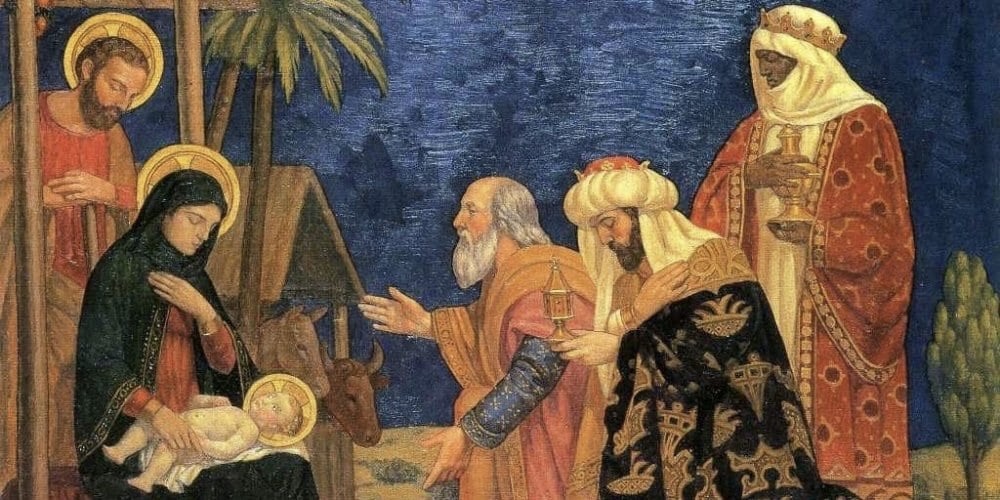
Epiphany, a Crossroads Initiative
Walking into the New Year with Mary

HOMILY: Solemnity of Mary, the Mother of God (A)

Numbers 6:22–27 / Galatians 4:4–7 / Luke 2:16–21

1 January 2026 

Fr. Ricky Cañet Montañez, AA

Another year has come to a close. We look back on 2025 and see that it was filled with a mix of good things and bad. Some experienced financial success, others did not. Some people’s lives were ruined by calamities, others were saved. Babies were born into some families, while others experienced the loss of loved ones. This roller coaster of highs and lows can at times be exhausting. May nabuo at may nabuwag. May tumuloy at may nahinto. May saya at may lungkot. Nakakapagod kung iisipin. (Some were formed and some were broken. Some continued and some stopped. Some were happy and some were sad. It is tiring to think about.) The heart does get tired — tired of being strong, tired of holding everything together, tired of pretending that everything is okay. Moments like these, we do not really long for answers because explanations can feel forced or empty and advice can feel insulting and condescending. Rather, we yearn for the comfort and consolation of home — a place where we feel safe and loved. 

I once listened to a man who had just lost his mother. He was strong, composed and respectable — yet when he spoke of her, his voice broke.  He said, “Father, when she died, I realised something… all my life, when I was tired or afraid, I was always running home to her — even when I did not consciously intend to.”  On her final day, when she could no longer speak, he had held her hand. As long as he held her, he felt somewhat safe. When she was gone, he said he felt like “there was no shelter for him in the world anymore.”  Many of us know that feeling — be it because of a really good friend, a spouse, a close relative or a beloved, but mostly because of loving parents, most especially mothers. Unfortunately, some may never have had the experience at all, but still, deep within us lives that aching desire to be held without being judged, to be seen without having to explain, to rest without fear of being left alone. 

This is why today’s feast touches something so tender within each one of us.  Before Jesus healed the broken-hearted, before He carried the weight of the world, before He embraced the least, the last and the lost, someone else held Him tight and made Him feel loved and safe.  The God who saves us, chose to be carried in human arms, comforted by human hands, and loved by a human heart.  He could have saved us from His heavenly home but He did not. He chose to have a human mother. Mary was the first home God ever knew on this earth — not a luxurious palace fit for a King nor a place of learning that could provide all the answers. He chose a pure and simple heart that was willing to make space for Him.  She held God when He could not speak. She loved Him before He could give anything back. In her arms, the eternal God learned what it meant to be safe in this world. 

Maybe this is what some of us are longing for today — not solutions, not miracles, but the assurance that we are still held — that despite all our mistakes in life we are not despicable and unlovable, that despite all the bad things that happen to us we have a refuge where we can find comfort and safety. As we honour Mary, the Mother of God, we honour her as our own heavenly mother. At the cross, Jesus entrusted us to her as her children and through the ages she has been faithful to that trust. She is God’s gift to us because when life feels heavy, when we are tired of being strong, when parts of us feel broken or forgotten — it matters that we have an undeniable assurance that we are not alone. Mary is always there, praying for us and holding us in her heart, even when we feel there is no one around to hold us. If we have recourse to her, she cannot resist us, her children. 

Every Christmas, when we recount Mary and Joseph’s search for shelter, we are asked to make room in our hearts so that Jesus may be born in us. As we begin the new year, remember that the God who once rested in Mary’s arms still longs to rest in our hearts. Let Mary guide us to her Son, and let her be our comfort when times get rough. Let us allow Mary to show us how to be a “home” for one another too, especially for those who are weary and lost. May we learn, like Mary, to hold life gently, to love without fear, and to trust that even in our fragility, God chooses to dwell with us. 

Mary walks with us as we step into another 365 days of uncertainty, carrying both our hopes and our wounds. She gently leads us to her Son, Jesus, teaching us to trust Him and place our lives in His hands. And so we move forward with courage, knowing we are never alone, always held in His love, and forever at home in Him.

✨ A blessed 2026 to us all. ✨

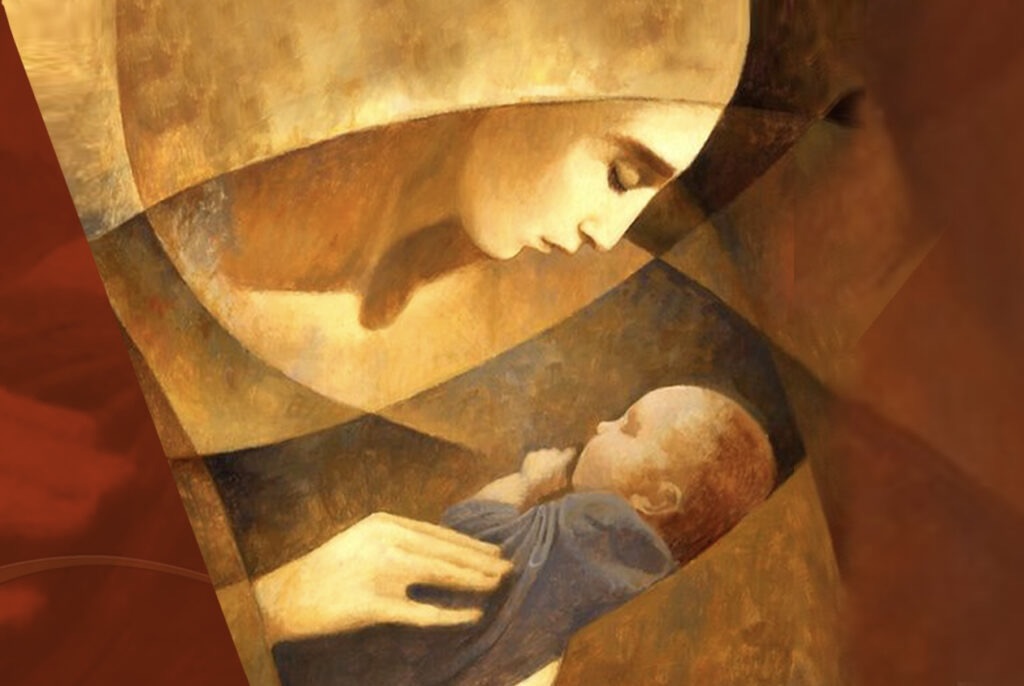
Mary, Mother of God from paoline.org

Holiness in the Mess: Lessons from the Holy Family

HOMILY: Feast of the Holy Family of Jesus, Mary and Joseph (A)

Sirach 3:2–6, 12–14 / Colossians 3:12–21 / Matthew 2:13–15, 19–23 

Fr. Ricky Cañet Montañez, AA 

Every time we celebrate the Feast of the Holy Family, many of us come carrying mixed emotions because when we hear the word family, we do not always think of peace and harmony.  Sometimes we think of distance, of sacrifice, of unfinished conversations, and of love that is real — but also painful.  And in our hearts, some of us may believe that our own families are far from holy. 

Today’s Gospel is such a consolation for those of us who are keenly aware of the imperfections in our families. Actually, the Holy Family of Jesus, Mary and Joseph was not a picture-perfect family either.  They did not live in comfort.  They did not have financial stability or security. For a time, they lived as refugees in a foreign land — uncertain of what tomorrow would bring. Moreover, despite all these, it was the family where God chose to dwell. 

Let me share a simple story.  I once spoke with a mother who was going to send her son abroad. She tried to smile, but her eyes told a different story. She said to me, “Father, hindi ko na siya ihahatid sa gate. Baka hindi ko kayanin.” “Masakit,” she said, “pero kailangan… para sa kinabukasan niya.” (“Father, I won’t be taking him to the gate anymore. I might not be able to handle it.” “It hurts,” she said, “but it’s necessary… for his future.”) Thus, on the day of his flight, she prepared his favorite meal, helped pack his clothes, and double-checked that he would have everything he would need. When it was time to say goodbye, she stepped back — not because she loved him less, but because she loved him very deeply. Her love was a quiet, daily sacrifice — giving everything without demand and choosing her son’s needs over her own heartache. This is family!

This is the kind of love we see in the Holy Family. Joseph did not know where the road would lead when he had to bring Mary and the child Jesus to a foreign land, for their safety. We can imagine Mary, doting over Jesus, caring for him and protecting him not knowing the intensity of the suffering and humiliation that he would endure in the future.  Yet, they trusted God enough to move forward,  to leave what was familiar, and to bear that fearfulness and uncertainty without letting it paralyze them.  The Gospel gently reminds us today: holiness is not found in comfort and certitude but rather, it is found in courageously following God’s will in the face of the unknown. 

In our First Reading, Sirach calls us to honor our parents — not for their perfection, but for the unseen sacrifices behind their choices. Some memes remind us to refrain from always blaming our parents because often they simply do their best under the circumstances and with the knowledge available to them. St. Paul echoes this in the Second Reading, urging us to “clothe ourselves” in compassion, humility, and forgiveness. (Colossians 3:12) He reminds us that family love is not always an automatic feeling; it is a conscious, daily choice made especially during difficult moments. Perhaps the quiet truth we need today is this: holiness in the family is found in loving through the tension. It means caring for one another through every mood swing and disagreement, while remaining selfless enough to let go—trusting God to reach where our own hands no longer can. 

Some families today live with absence.  I know of a family where both parents live abroad and all their four children also live in different parts of the world for work. They cannot even be together yearly for Christmas. Some families are dealing with the pain of having lost a member — whether an elderly parent or tragically a young child. Some feel the absence of family members who withdraw due to misunderstandings and broken relationships. And still — God is there. The Holy Family teaches us that even when life feels unsettled, God does not walk away. He walks with families who are tired, uncertain, and simply trying to love as best they can. 

Today, as we honor the Holy Family, let us remember that their life together was far from perfect, they were displaced, they lived in fear for their lives.  Yet, God chose to make His home with them.  If our family feels incomplete, fragile, or still healing,  let us not be afraid. We are in good company!  This is often where God chooses to stay. After all, holiness is not having a perfect and pristine life where everything is in order. It is trusting God even when life feels unsettled and messy. If God could make a home with a poor family on the run, he can surely make a home in ours. 

Brothers and sisters, let us look past the issues, problems and uncertainties we perceive and experience in our own families. Let this not discourage us from giving the best love we can manage for our parents, siblings, and children. Let us remember that our family is not a museum of perfection, but a living sanctuary where God’s grace is constantly manifesting.

Why Christmas Matters

HOMILY: The Solemnity of the Nativity of the Lord (Christmas)

Isaiah 52:7-10 / Hebrews 1:1-6 / John 1:1-18

25 December 2025 

Fr. Ricky Cañet Montañez, AA

Every year, Christmas comes — and it surprises me that I always get asked: “Father, why do we have to celebrate Christmas?” “Can we not believe in Jesus without celebrating?” Some even say, “That is not important.” Tonight, brothers and sisters, the Gospel gives us a very simple answer — we celebrate Christmas because God did the unimaginable — He closed the gap between heaven and earth — between divinity and humanity.  Something happened. Someone came. Something has changed.

Let me share a short story.  There was a young doctor who volunteered to be assigned in a far-away village — secluded, quiet, far from big hospitals and the city. When he arrived, it was strange that people did not approach him right away. It turned out they were cautious and doubtful of his presence.  Why? First, they were afraid it would be expensive. “He is a doctor — we probably cannot afford to see him for consultation.” Second, they were afraid of what he might discover. “What if he finds something serious and fatal? It’s better if I do not know… I do not have money for treatment.” And third, they were afraid of being judged and shamed. “Maybe he would not understand our life. Maybe he will look down on us.” So, the doctor made a choice.  He stopped acting like a visitor from far away.  He removed his white coat.  He learned their names.  He ate what they ate.  He walked the same dusty roads and earned their trust and friendship. Only then did people slowly come to him.  It was then that their village experienced healing.  The doctor recounts, “I had to live like them so they would not be afraid.” 

That is precisely what Christmas is. “And the Word became flesh and made His dwelling among us…” (John 1:14) God wanted to heal our world that was so wounded by sin, fear, and darkness, but people feared Him because He was a powerful, frightening mystery. How could humanity be sure that God genuinely cared and understood people’s needs? We have so many doubts and fears. We are afraid He might ask too much. We are afraid He might show us something we do not want to face. We are afraid we might not be good enough. Thus, God did something unexpected.  He came to us, not as a frighteningly powerful ruler, but as a baby.  He came as a sweet defenceless baby — a cute, fragile, and innocent child that anyone would love to hold close; a child who would grow among the people and embrace them back with unconditional love. This is why Christmas matters. This is why we celebrate. 

If Jesus were only a teacher, we would not need to celebrate His birthday.  If He were only a prophet, Christmas would be optional — after all, the only other prophet whose birthday we celebrate is John the Baptist. No one else’s — not Elisha, not Amos, not Jeremiah, not even the great Elijah. Jesus is different. He is God, Himself, who chose to be close to His people by becoming one of us. This is a truth the Church repeats when it prays: “When our frailty was assumed by your Word, human mortality received unending honour.” God became human so that we might share in His divine life.  St. Irenaeus says: “God became what we are, so that we might become what He is.” Without Christmas, God would have remained distant. With Christmas, God has a face and a name, a heart that beats for us, and arms that embrace us. 

Brothers and sisters, when we gather with family and friends over a good meal or an exchange of gifts, remember that we do not celebrate Christmas simply out of habit.  We celebrate because we are endlessly grateful and humbled that the all-powerful God who created Heaven and Earth chose to be close to us. He sent His Son as the bridge that would make it possible for Him to sit with us, to walk with us, and to be known to us. He did not want us to fear Him but rather be drawn to Him so that that He could save us. 

As we celebrate the miracle that is Christmas, let us never take this gift for granted and bear in mind the depth of God’s love for us.  God showed up for us and drew Himself close. May we have the courage to see Him in others and draw close to the Christ in them — showing up with grace even when it is hard and to love when it is needed most.  

Maligayang Pasko sa ating lahat.🎄 (A Merry Christmas to us all!🎄)

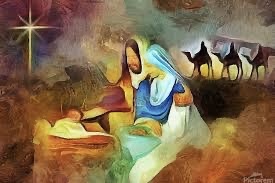
THE NATIVITY by Wayne Pascall Art

Emmanuel Amidst our Unanswered Questions

HOMILY: Fourth Sunday of Advent (A)

Isaiah 7:10-14 / Romans 1:1-7 / Matthew 1:18-24 

21 December 2025

Fr. Ricky Cañet Montañez, AA 

A few years ago, someone came to see me late in the afternoon. He sat down, sighed deeply, and said, “Father, I did everything right. I followed the rules. I tried to be good. Pero bakit parang mas lalo pang gumulo ang buhay ko?” (But why does my life seem to be getting even more complicated?) He had avoided trouble and made responsible choices. He lived decently and yet, at that moment, his life was more complicated than ever. The deepest pain was not the problem itself, but the question that lingered in his heart: “If I was trying to do what was right, why did things turn out this way?” 

That question brings us very close to Joseph today because he had every right to ask that same question of God.   Joseph was a good man — righteous, the Gospel says. He did what was right. He lived quietly. He had plans. His life made sense. Then one day, he finds out that his fiancée Mary was with child. For Joseph, this was confusion, heartbreak, and public shame all at once. Being a reasonable person, Joseph found a solution that was lawful but still clean and quiet — he decided to walk away.  And then God intervened — not to simplify Joseph’s life, but to complicate it even more. In a dream, God asked Joseph to stay, take Mary into his home, and raise a child that was not biologically his.  For all his life he would have to live with questions, that would never be fully answered.  Why would God do that? 

Many of us know this experience. How many times have we thought that leaving a difficult situation was easier than staying? How many times did we wonder if we were justified in protecting ourselves and walking away? Those of us who are married know, that life together as a couple is not always smooth-sailing. Sometimes, family life can be so overwhelming, especially when we are burdened with responsibilities that were not of our choosing. We pray, “Lord, make this easier.”  However, God sometimes replies, “Stay. I am with you.” God does not always save us by removing the difficulty. Like Joseph, He saves us by calling us to remain faithful when obedience is costly and the road is unclear. 

Notice that God does not explain everything to Joseph. The angel does not give a long lecture. He simply says, “Do not be afraid.” (Matthew 1:20) That is often how God works. He gives us His PRESENCE, not explanations.  Saint Paul reminds us in the Second Reading (Romans 1:1-7) that we are called by grace — not because we are ready or because we understand everything. God simply chooses to work through our imperfect lives.  Joseph, himself, did not become holy because he understood God’s plan.  He became holy because he trusted in God’s abiding presence in his life.  Isaiah gives that presence a name: Emmanuel — God with us.  It does not translate to “God who removes all complications” or “God who fixes everything instantly”. 

Months later, I crossed paths again with the man who had spoken to me. And he said something simple and true: “Father, hindi pa rin malinaw ang lahat. Pero sa gitna ng kalituhan, doon ko nadama — hindi pala ako iniwan ng Diyos.” (Father, things are still unclear. But in the middle of it all, I felt that God had not abandoned me.) That is a clear example of Advent faith!  The Emmanuel did not wait for life to become neat and orderly.  He was born in the middle of confusion, uncertainty, and unfinished stories. 

On this Fourth Sunday of Advent, let us stop asking questions like: “Lord, bakit ganito?” (Lord, why did it turn out this way?)  but rather ask “Lord, nasaan Ka dito?” (Lord, where are You in this?) Sometimes, the complicated road we are walking is not a sign that God is absent. It may be the very place He has chosen to stay.  Like Joseph, may we choose to trust — not because everything makes sense, but because God (the Emmanuel) has chosen to stay with us!

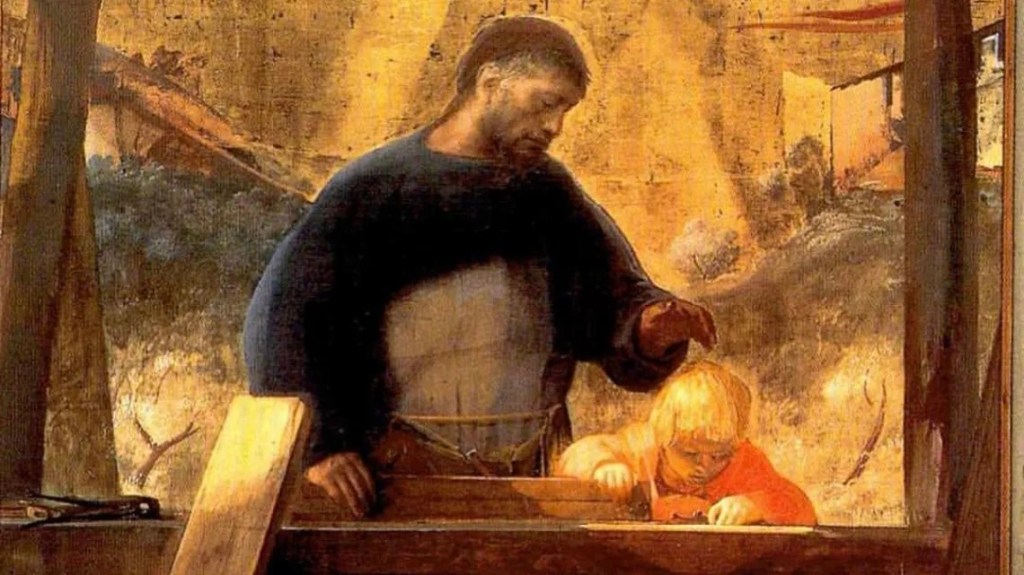
Featured Image: Altarpiece of St Joseph the Worker. Pietro Annigoni (1910-1988). Chapel of the north aisle, Basilica of St Lawrence, Florence. Italy, 20th century.

Quiet Grace in Advent

HOMILY: Third Sunday of Advent (Gaudete Sunday)

Isaiah 35:1-6a, 10, James 5:7-10 and Matthew 11:2-11. 

14 December 2025 

Fr. Ricky Cañet Montañez, AA

A few years ago, I visited a woman grieving the loss of her husband. Every time I checked on her, she would say, “Father, I have been praying… pero wala naman nagbabago.” (I have been praying but nothing is happening.) One afternoon, I found her watering a small plant and she was still looking rather sad.  When she saw me, she pointed to a tiny leaf that had just sprouted: “Kahapon, wala ‘yan. (Yesterday it was not there.) Kaninang umaga, may umusbong. Hindi pa bulaklak… pero may buhay na.” (Today, something sprouted. It is not a flower yet but there is a sign of life.)  That little leaf made her smile because something had begun. A small, quiet grace. 

Gaudete Sunday is exactly like that — we have joy not because the desert has become a garden, but because the first green shoot has appeared.  Amidst our advent experience of expectant waiting, we are able to rejoice at small proofs of a promise to be fulfilled at the end.  We know that deserts cannot become lush and green overnight, but Isaiah does relay God’s promise that the desert will bloom! God’s work is real, but often slow, hidden, and easy to miss. That is why James, in our Second Reading tells us to be patient like a farmer who cannot rush the seed but trusts that life is growing beneath the soil. 

In our gospel, we see that John the Baptist is literally waiting in the darkness of a prison, wondering what will become of him. Upon hearing of the works of Christ, he sends his own disciples to ask Jesus, “Are You the One?” Jesus does not perform a dramatic miracle to convince them — He simply points to the slow, steady signs of the Kingdom: the blind beginning to see, the poor receiving hope. That is all John got — a verbal assurance, passed on by messengers, that although, not everything was finished, something had begun. That was enough for John. 

If we dig deeper into the experience of John, we can say that he missed out on a lot in his day. Poor John was beheaded at just about the time Jesus had begun His public ministry.  He never really got to witness first-hand the miracles of Jesus, listen to Jesus’ preaching, or see how crowds flocked to Him. He never got to be there at the crucifixion to comfort his Aunt Mary and his tortured cousin. He never got to be in awe of the resurrected Christ or to receive the Holy Spirit at Pentecost!  Perhaps, this is why Jesus said that although John was a great prophet, “the least in the Kingdom of Heaven is greater than he” (Matthew 11:11). Who are the least? That would be all of us who have come to know Jesus and have believed in Him and His teachings.  We are the “least” because by our merit, we will never measure up to the great virtue of John the Baptist. Our advantage over him is our experience of Jesus who is Lord and King! We now belong to the era that has had a taste of the Kingdom of Heaven in our lifetime. This is what we can celebrate! That is the small sign pointing to something greater that we can look forward to. 

My friends, maybe some of us feel like that grieving woman in my story earlier — still waiting, still praying, still hurting. Much of our lives is marked by pain, disappointment, anxiety, and uncertainty, for we live in a world that is not yet whole — world shaped by human imperfection and the lingering presence of sin. However, this is not the end of our story. We are still in the middle — waiting for the end Jesus promised — His return, His reign, and the establishment on earth of His Kingdom of mercy, justice, love and peace!  Gaudete Sunday invites us to look again at our situation. Is there a small leaf somewhere in our life? A softened heart? A quiet peace? A tiny step toward healing? That is a sign that the Kingdom of God is alive and slowly making manifest in our world. This is proof that one day, the earth will come to know the full glory and splendour of God’s Kingdom! 

Thus, let us open our eyes and our hearts because often, the signs seem small. Still, this is grace. This is enough reason to hope! This is God already at work. And this is enough for us to be joyful!

Grace in the Toughest Places

HOMILY: Second Sunday of Advent (A)

Isaiah 11:1-10 / Romans 15:4-9 / Matthew 3:1-12

7 December 2025

Fr. Ricky Cañet Montañez, AA

Have you ever noticed who sits beside whom at gatherings? In meetings, reunions, in school canteens, even simple parish meals, we naturally choose to be with people who make us comfortable. In the same way, there are people we quietly avoid. It is not because we are mad at them, but because being around them is just… draining. Their company can feel complicated, awkward, or just plain exhausting. Once in a while, you see two people who never hang out somehow end up next to each other and, surprisingly, get along really well!  They talk. They laugh. And we find ourselves thinking, “Sino’ng mag-aakala?” (Who would have thought?) “Parang imposible dati.” (It seemed impossible for this to happen!)

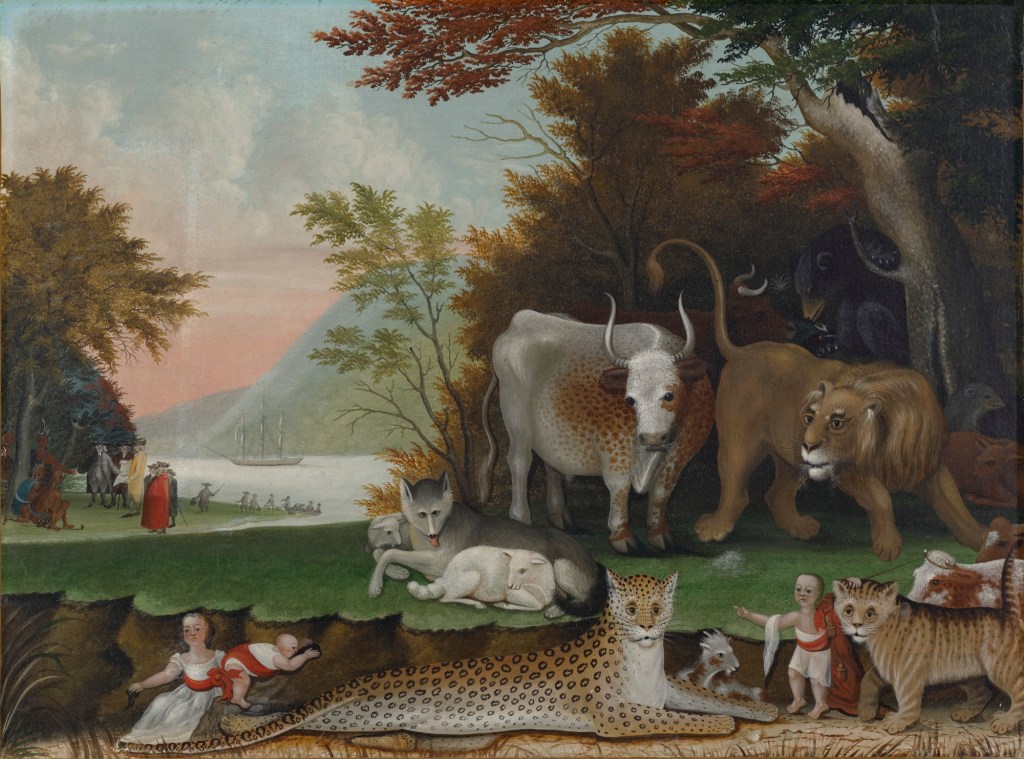
This surprising image — the impossible sitting together — is exactly what Isaiah describes today in the First Reading. The wolf with the lamb. The leopard with the goat. The calf with the lion. A child leading them all. This is more than the absence of conflict. It involves a transformation so deep that natural enemies can share the same space. Picture the lion — a natural predator, giving up meat to eat grass like a cow.  Isaiah is painting for us an image of God’s Kingdom: a holy place where there is “no harm or ruin”, where the incompatible become neighbours, the impossible co-exist, and grace makes possible a peace that defies logic.

If we are honest, each of us has our own “wolves and lambs” moments in life. There are people we avoid because of a difficult or painful past experience, or our personalities often clash with theirs, or because being with them often leads to some misunderstanding. Around them, we exert a lot of effort to hold our tongue and keep our emotions in check to keep the peace.  Sometimes we are the wolf in someone’s story — someone finds us difficult or hard to approach. Sometimes we are the lamb — wounded, cautious, preferring distance. Advent invites us to look gently at these places of tension. It is not to solve everything overnight, not to force reconciliation, but to allow God to plant even a small shoot of peace in the ground that has dried and hardened.

This slow, gentle work of God is echoed in John the Baptist’s call: “Prepare the way of the Lord, make straight his paths.” (Matthew 3:3) John  warns the wicked to repent and produce good fruit as proof of repentance because God is sending someone mighty, with the ability to “baptize with the Holy Spirit and fire”  (Matthew 3:11) who is meant to gather the grain and separate the chaff for burning. This refers to the Messiah’s definitive judgment that will result in the preservation of the faithful and the utter destruction of the unfaithful and the forces of evil. This time of justice is prophesied by Isaiah who describes a Messiah with the “spirit of wisdom and of understanding, counsel and of strength, … knowledge and of fear of the Lord” (Isaiah 11:2) who shall judge the poor with justice, and… strike the ruthless and slay the wicked with His mouth and His breath. (Isaiah 11:4) For those of us now, who look forward to the return of Christ who will usher a time when everyone —Jew and Gentile, will glorify the Lord together. St Paul tells us that all that is written about the coming of Christ is meant to give us hope. He says that as we wait patiently, we must already try to live in harmony with each other. 

This Advent, let us not only prepare a straight path for Christ into our hearts — let us also allow God to straighten the paths between and among hearts, especially where relationships have become crooked or blocked. They say some of the hardest roads to repair are emotional ones because there are the hurts we avoid and ignore. It is when we take even a tiny step toward the people we have kept at a distance that the Kingdom begins. Isaiah’s vision reminds us that God does not only change situations — He can change natures. Obviously, wolves and lambs cannot change what they are but grace can transform the way they relate. This means that even if personalities do not change, and even if painful history cannot be erased, God can soften what feels unchangeable. God can give us new instincts: a little more courage, a little more gentleness, a little more desire for peace so being around people who trigger us, does not feel like torture. 

And so we return to that simple image from the beginning: who do we sit beside, and who do we avoid? Advent is not about forcing ourselves into uncomfortable places, but about letting God stretch our hearts just enough to imagine the possibility of peace. God dreams of a world where the impossible can finally sit together. Our psalm today reminds us that in God’s time justice shall flourish and the fullness of peace will be felt forever. (Psalm 72:7)

Today, perhaps we can offer a simple prayer: “Lord, give me the grace to take one small step toward the person I never thought I could ever sit beside.”  In that humble space, the Kingdom quietly begins.

Peaceable Kingdom
Creator: Buffalo AKG Art Museum Photo Credit: Brenda Bieger

Turning Toward the Light

HOMILY: First Sunday of Advent (A)

Isaiah 2:1-5 / Psalm 122:1-9 / Romans 13:11-14 / Matthew 24:37-44

30 November 2025

Fr. Ricky Cañet Montañez, AA 

Are you good at taking selfies? Some people are such experts — alam na nila agad (they know right away) where the light is, how to angle their face, how to get the best shot. I do not quite get the hang of it myself. I end up making multiple attempts — adjusting and readjusting — moving to the side, lifting the phone a little higher, searching for that spot where the light finally hits my face right. The secret, I am told, is in angling your face towards the light. When the light is low, you will not get a great picture, but in the best light, everything becomes clearer, warmer, more alive. 

The observance of Advent is like that. It is a time of turning towards the light and lifting our eyes towards Christ, allowing His light to reveal our best selves — as God envisions us. In our First Reading, the Prophet Isaiah sees God raising His mountain for all to see, so His people will always know where to seek Him and how to seek His guidance. However, they will still have to climb to ascend the mountain to find the Lord. The Psalm shows pilgrims going uphill — ordinary people lifting their feet, one step at a time, trusting in God’s promise, seeking His peace and prosperity.  

In the Second Reading, St. Paul reminds us that we must live “as in the day,” — to act as though the day of the Lord was at hand. To turn towards the light, is to learn to live consistently in the light.  If we desire to be in God’s presence one day, each day we must move closer and closer towards the light — essentially ascending the mountain and overcoming challenges in our path. Advent is a time for us to pause and recognize what keeps us low; what deters us from the ascent, what keeps us in darkness. Sometimes, it is not even the big sins but the small habits and behaviors that keep us from focusing on Christ — the late-night scrolling that steals our peace, the small resentments we replay, the tone of voice that brings an atmosphere of tension into our home. In the Gospel, Jesus warns us not about dramatic sin but about spiritual sleepiness — that low, dull way of living where we stop noticing God and stop noticing one another. 

Lifting our life does not mean changing everything. It means choosing one small upward step at a time. Maybe we pause for five minutes of quiet before checking our mobile phones. Maybe we soften our tone when frustration rises. Maybe we give full attention when a child, a spouse, a friend, or a parent speaks. Maybe we stop ourselves mid-complaint because we can feel it lowering our spirit. These small lifts raise the whole picture of our lives.  So Advent asks us: Which part of our life needs to rise just one level higher? Not dramatically — just lifted a little toward God.  When we raise anything toward the Light, the Light does the rest. Just like those excellent selfie-takers who know where to stand — we only need the courage to move toward the Light. 

This Advent, may we yearn to turn our faces to the Light. May we patiently help each other in our ascent of God’s mountain, even if we are seemingly inching our way up. Let God’s radiance make everything clearer, kinder, and more alive, enabling us to see one another for who we are — Children of the Light!

From Stone and Gray

Where Love Reigns: In the Quiet Places of Sacrifice

HOMILY: Solemnity of our Lord Jesus Christ, King of the Universe (C)

2 Samuel 5:1–3 | Colossians 1:12–20 | Luke 23:35–43

23 November 2025

Fr. Ricky Cañet Montañez, AA 

We Filipinos admire winners. When we are strong, wealthy, or well-connected — we get respect. Many times, our idea of leadership is shaped by loudness and the influence of the crowd that endorses and rallies behind a person. We give them power over us, even if they are not qualified, even if they have pending cases, even if they live questionable lifestyles. 

It does not make sense that despite our nation being mostly Catholic, we Filipinos tend to choose leaders who are the exact opposite of Jesus Christ. On this last Sunday of the Church year, the Gospel confronts us with the shocking image of our true King — as one who hangs on a Cross (Luke 23:35–43). No throne. No golden crown. No machinery. No bloc of followers. Just wounds, insults, and two criminals beside Him. And we find ourselves asking: “Lord, why is Your kingship like this?” 

In the First Reading, Israel tells David, “You are our bone and flesh” (2 Samuel 5:1–3) — a king close to his people. Jesus fulfills this not by rising far above us, but by entering our deepest suffering. He is the only King who could triumph over everything… but chose not to. He could have come down from the Cross. He could have silenced His enemies. He could have proven His power. 

However, Jesus stays — not because He is weak, but because love refuses to abandon the beloved just to look strong. Here is the mystery: Christ wins by losing. He saves not by escaping the Cross, but by remaining on it — for us. 

Moreover, if we look closely, this kind of kingship is deeply familiar to the Filipino soul. Every day, we meet people who “lose” something out of love. Think of parents who give up their own dreams so their children can pursue theirs, Overseas Filipino Workers (OFWs) who sacrifice being present in their respective homes so their children can have a future, teachers who are stretched thinly yet still giving their best, jeepney drivers who endure long days just so they have something to bring home for dinner, and young people who choose honesty even when it makes their life harder. 

These hidden sacrifices — these quiet losses — are where Christ the King reigns the strongest. As St. Paul says, Christ reconciled all things “through the blood of His Cross” (Colossians 1:12–20) — not through wondrous works, not through displays of domination and power, but through the love revealed in His loss. Christ redefines what winning truly means. In God’s eyes, victory is not about rising higher, but loving deeper. Not about gaining more, but giving more. Not about applause, but compassion. Not about avoiding loss, but allowing love to cost us something. 

Which brings us to the question this feast asks us gently but firmly: “What do we need to lose so that love can win?” Do we need to let go of pride so reconciliation can begin? Do we let go of anger so peace can enter? Do we dare to let go of a secret sin so grace can flow freely once more? Do we let go of control so God can finally lead? Do we let go of fear so God can make our life’s purpose larger than our worries? His Kingship is not diminished by difficulty — rather, it is how He manifests His power. When He was on the cross, mocked from every side, seemingly defeated, He gave His royal promise to the repentant sinner who chose to stand with Him: “Today you will be with Me in Paradise” (Luke 23:43). 

At the end of the Church year, the message is both simple and stunning: Jesus lost everything so we could gain everything. He chose weakness so we could discover strength. He chose the Cross so we could find life. Christ is not the King who wins by winning. He is the King who wins by loving. And every time we “lose” something for love, He reigns in us all.

Religious Face of Jesus Christ, Spiritual Christian Canvas Painting by F. Abderrahim

When the World Shakes, God Stands Firm

Homily: Thirty-Third Sunday in Ordinary Time (C)

Malachi 3:19–20a; 2 Thessalonians 3:7–12; Luke 21:5–19

Fr. Ricky Cañet Montañez, AA

16 November 2025

Do you look forward to the Second Coming of Jesus? Are you excited to see Him? If we truly love Him, our instinct is to say, “Of course!” Yet every time we hear today’s Gospel, Jesus does not speak of angels, trumpets, or glory. Instead, He talks about wars, earthquakes, betrayal, and persecution. It is not quite the image we are expecting. It is unsettling. However, let us take notice because after this description, Jesus immediately says, “Do not be terrified.” (Luke 21:9) He promises strength, wisdom, and help to those who persevere.

Indeed, it feels like Jesus is speaking directly into our reality here in the Philippines. We live surrounded by noise: endless political debates online, videos predicting end-times, news of calamities, and group chats that somehow never sleep. Add to that the real persecution of Christians in places like China, Africa, and India — and we wonder if this storm could someday reach us too.

With all this noise, it is easy to get overwhelmed. It is easy to lose focus. It is tempting to grow cynical and say, “Ano bang magagawa ko? (What can I possibly do?) I am just one person.” And because many believe the world is too broken, they start living as if there is no tomorrow, no judgment, no life after death. They chase comfort at any cost — even if it hurts others, even if it wounds their own soul. Bakit pa ako magsisikap? Hindi ko naman mababago ang mga tao.  (Why bother making an effort when people will not change anyway?) On the other hand, this is where today’s Psalm interrupts us: “The Lord comes to rule the earth with justice.” (Psalm 98:9) God is not absent. God is not silent. God is not defeated.

Jesus then shifts the focus. Faith is not pretending everything is fine. Faith is being rooted, steady, and loving even when everything shakes around us. St. Paul reinforces this in the Second Reading. He reminds the Thessalonians that he and his companions worked “night and day,” not causing disorder, not burdening others.  (2 Thessalonians 3:8) This simply means that when life is chaotic, our response is not to panic… but to perseverance. Not to be noisy… but to be faifthful. Not to complain… but to be quietly doing what is right.

Moreover, this is where the Gospel becomes incredibly practical because for us, perseverance does not require doing anything extraordinary. It is found in the small, faithful choices we make each day. It is waking up and showing up — consistently. It is helping a neighbour clean up after a typhoon. It is the young volunteer bringing relief goods during a flood. It is the teacher who keeps teaching despite limited resources. It is the parishioner who attends Mass every Sunday, rain or shine. It is the mother who keeps praying for her children even when they reject her. These things seem small but they are exactly what Jesus is talking about. Our small, steady acts of faith cut through the noise of the world and they become signs of hope for others.

Thus, here are the questions the readings place before us today: Amid the political tension, the social unrest, the disasters, the pressures of daily life — can we remain faithful? Can we keep showing up, quietly, humbly, lovingly, even when it is inconvenient, tiring, or unpopular… Because that is what fidelity is. That is what witness is. This is the kind of faith Jesus promises to sustain.

And so, we return to His final words in the Gospel: “By your perseverance, you will secure your lives.” (Luke 21:19) Not by fear. Not by noise. Not by power. But by the simple, daily choice to trust Him. And when we do — Malachi tells us what awaits: “The sun of justice will rise… with healing in its rays.” (Malachi 4:2)

Hence, brothers and sisters, we keep going. We keep serving. We keep loving because even if the world trembles, God’s promise stands firm. His justice — steady, bright, healing — will rise upon those who persevere.

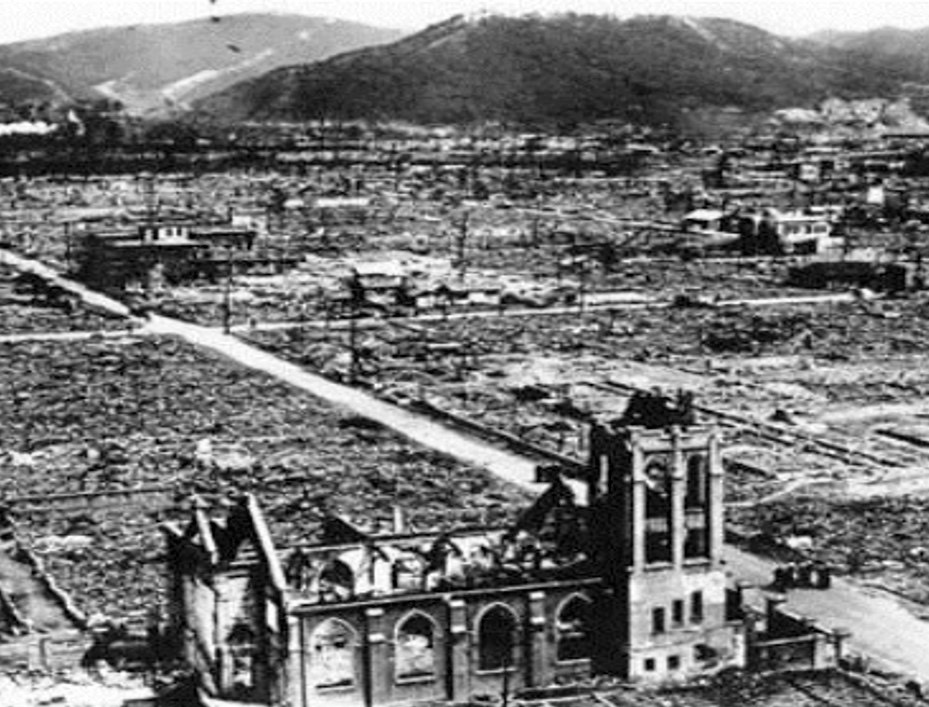
From the National Catholic Register: An aerial view of Our Lady of the Assumption Church after the Aug. 6, 1945, bombing. A small group of priests can be seen standing in the road in front of the church.